
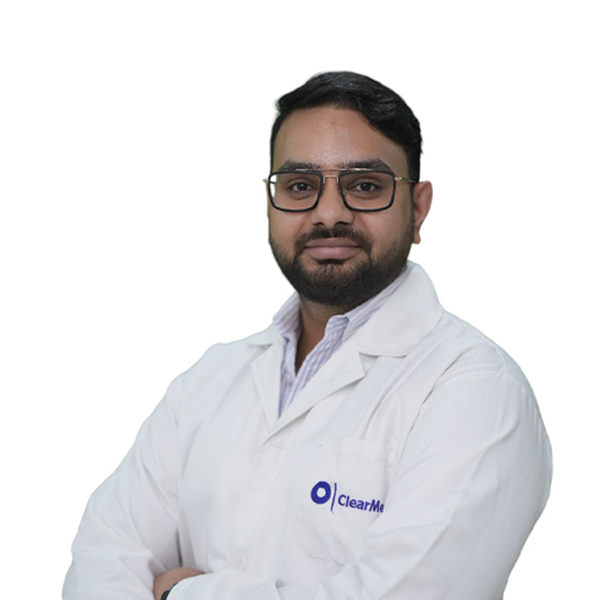
Consultant- General and Laproscopic Surgery
Experience: 11+ Years
PrimaCare Clearmedi Multispeciality Hospital,Sector 104, Noida
Varicose veins, known for their swollen and twisted nature, usually appear in the legs due to the malfunctioning of the venous valves and inefficient circulation mechanisms. Timely varicose veins treatment in Noida provides an optimal chance to relieve patients from uncomfortable symptoms, enhance hemodynamic flow, and prevent possible complications.ClearMedi Hospital takes care of its patients by offering comprehensive treatment based on proper diagnosis, individual treatment plans, and advanced procedures available to patients. Among the variety of methods used are changes in lifestyle, compression therapy, minimally invasive procedures, and surgery, which depend on the severity of the disease. Paying attention to both patients' health and treatment results, ClearMedi strives to provide reliable treatment for varicose veins.
Treatment of varicose veins entails a range of medical procedures meant for treating dilated and twisted blood vessels caused by malfunctioning or damaged valves of the veins. The main aim of these medical procedures is to ensure proper flow of blood, relieve the symptoms of pain in the limbs, swelling, heaviness, and overall discomfort, and avoid possible complications. Treatment options depend on the severity of the condition and can include compression stockings, lifestyle changes, sclerotherapy, and minimally invasive techniques. In the case of people with severe or resistant symptoms, varicose vein removal becomes necessary. Besides, the use of varicose vein treatment to close the faulty veins improves the flow of blood.
Some types of varicose vein treatments include:
A varicose vein operation is required for the following reasons:
Before commencing treatment of varicose veins, the doctor performs a thorough examination in order to determine the severity of the condition and the causes of impaired blood circulation. This process begins with a physical examination of the legs in order to look for signs of dilated veins, oedema, skin discolouration and local tenderness. In addition, the doctor reviews the patient's medical history, symptoms and lifestyle. In this case, a duplex ultrasound test is usually carried out to assess blood flow, valvular incompetence and possible presence of thrombi. In addition, Doppler ultrasound and vein mapping can be used to locate the affected veins.
The main goal of surgery for varicose veins is to eliminate or remove the damaged veins, thus ensuring the best possible hemodynamics in the lower limbs. The first step of the operation usually involves the use of either local or general anaesthesia, depending on the technique used during the procedure. In the case of minimally invasive procedures, the surgeon makes a tiny cut and inserts a thin catheter in the targeted vein. During laser varicose vein removal, energy is delivered through the catheter to burn the problematic vein, allowing the blood to flow through healthy veins. On the other hand, if surgical removal is required, the veins are ligated and removed through small cuts.
The course of recovery following the surgical procedure for varicose veins depends on the type of treatment used, the severity of the condition, and the general well-being of the patient. Patients who have undergone minimally invasive procedures will be able to resume their normal activities within just a few days. Ambulation is highly encouraged in order to promote hemodynamic flow and prevent the formation of clots. Compression stockings may be recommended to promote tissue healing and reduce oedema. In addition, elevation of the legs when resting will help relieve pain. Post-operative care is crucial and involves keeping the surgical area clean and dry, taking prescribed medication, and refraining from heavy activity and prolonged standing during the early stages of recovery.
Although varicose veins surgery is considered generally safe, it has associated risks and complications that depend on the particular procedure used and the patient’s overall health condition. The possible complications can include pain, bruising, swelling, bleeding, and local inflammation. Some patients can experience paresthesia or anaesthesia due to the irritation of nerves, as well as the formation of blood clots in the treated vessels. Also, there is a possibility of the formation of new varicosities, which may require further treatment. Compliance with clinical recommendations, wearing compression garments regularly, and undergoing follow-ups will help to avoid these risks.
You should choose ClearMedi Hospital for varicose vein surgery for the following reasons:
Some related treatments and surgeries include:
If you want to book an appointment at ClearMedi for varicose veins treatment in Noida, please visit our official website or contact us at +91 959955977.
Call now!
FAQ


I recently found myself under your care for a cancer issue. While there, accompanied by my wife, we found that the entire staff at ClearMedi Hospital was exceedingly professional and efficient, from your E.R. receptionists to the cardiac care team. Very proud of your outstanding staff and service.
Sonia Chauhan
I was recently cared for at ClearMedi Hospital following a heart attack. I just wanted to say a few words about the exceptional care I received in the ClearMedi Hospital Cardiac Care Unit and the ICU. All of the doctors and nurses were friendly, pleasant, kind, thorough, conscientious and professional. I am happy to have been in their care.
Purab Singh
I am writing on behalf of my brother who was a patient in your hospital. I would like to thank you on behalf of my entire family for the help and consideration shown to me in what was a very difficult time. Again, I would like to thank you for the services you provide to patients and their families.
Deepal Sinha© Copyright 2026, ClearMedi. All rights reserved.





 Call: 9599565977
