
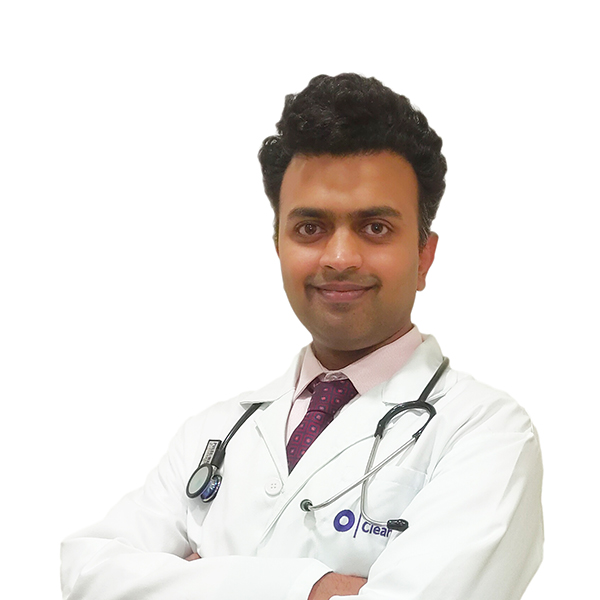
Consultant - Pulmonology, Sleep Medicine and Critical Care
Experience: 12+ Years
PrimaCare Clearmedi Multispeciality Hospital,Sector 104, Noida
Being one of the most advanced diagnostic techniques, bronchoscopy allows for the thorough examination of the respiratory system, including the airways, trachea, and lungs, in order to detect diseases such as infections, inflammation, obstructions, and tumours. If you need bronchoscopy in Noida, then ClearMedi Hospital can offer you professional respiratory care services with the help of advanced diagnostic equipment and highly skilled medical professionals. The technique involves the insertion of a thin, flexible tube with an imaging device into the nose or mouth in order to examine the airways; moreover, it enables doctors to take tissue samples, investigate abnormalities, and identify the causes of persistent respiratory problems.
Bronchoscopy is considered a minimally invasive diagnostic procedure, which allows thorough inspection of the respiratory tract, including the trachea and the pulmonary airways. Bronchoscopy is sometimes called diagnostic lung endoscopy or lung bronchoscopy and uses a thin and flexible bronchoscope equipped with a camera and light source device. This device is inserted through the nostril or mouth into the respiratory tract for inspection purposes. The main purpose of this procedure is the diagnosis of different diseases such as pulmonary infection, inflammation, obstruction, neoplasm, and other structural abnormalities. Besides, bronchoscopy is also used for sampling tissues for histological examination, removing obstructive mucus or foreign bodies from the airways, and studying symptoms like chronic cough and respiratory impairment.
Some types of bronchoscopies include:
You require a bronchoscopy procedure in the following situations:
Before conducting a bronchoscopy procedure, a thorough evaluation is carried out to determine the causes of the respiratory symptoms experienced by the patient. The process involves a detailed medical history review, physical examination, and imaging studies. Commonly conducted tests include chest X-rays and CT scans aimed at assessing the anatomy of the lungs and detecting any abnormalities. Laboratory tests may be required to determine the overall health status of the patient, oxygen levels, and infectious agents. Pulmonary function tests can be conducted to evaluate the ventilatory function, while pulse oximetry is used to measure the oxygen saturation in the blood. Depending on the clinical presentation, sputum culture may be performed to detect the pathogens of the respiratory system. These tests will help the physician determine whether a bronchoscopy is needed and choose the best method of the procedure.
The bronchoscopy process involves the use of a bronchoscope that is thin and flexible, which has an integrated camera and light source at the end of the tube. It is carried out by a respiratory specialist who administers local anaesthesia to numb the patient's throat, along with sedation to relax him/her. The tool is then inserted either through the nose or mouth and carefully guided into the larynx through the trachea and airways. During the process, the doctor observes the respiratory system on the screen and looks for any abnormal conditions like infection, obstruction, inflammation, or tumour growth. In some cases, small pieces of tissue or mucus can be taken from the lungs for further investigation. After the procedure, the bronchoscope is removed from the patient, and he/she is closely observed for a while.
The recovery process after bronchoscopy usually happens quickly, and most patients are discharged on the same day after some observation. The signs of post-procedure may include a slight sore throat, hoarseness, cough, or hemoptysis. To reduce the chances of aspiration, people who have undergone sedation or throat anaesthesia need to abstain from eating anything until the anaesthetics wear off. Medical experts recommend resting for the entire day and avoiding physical activities for twenty-four hours. Compliance with the medications, staying hydrated, and attending follow-up appointments to discuss the results of the biopsies or laboratory tests are crucial for the recovery process. It is important to seek immediate medical attention in case of any severe chest pain, bleeding, high fever, or poor breathing condition. Compliance with medical advice is the key to ensuring a smooth recovery process.
Despite the fact that bronchoscopy is generally a safe procedure, there are risks and complications that come with every procedure. Mostly, the side effects are temporary and mild, but sometimes serious complications can occur. Common side effects include pharyngeal pain, voice hoarseness, persistent coughing, and minor bleeding, especially when taking tissue samples. In some cases, fever, changes in oxygen saturation levels, or difficulty breathing might be experienced by patients after the procedure. Serious side effects, which are uncommon, include infections, bleeding, heart arrhythmia, and pneumothorax, especially after certain biopsy methods have been used. Also, allergic reactions to anaesthesia might sometimes occur.
You should choose ClearMedi, Noida for bronchoscopy for the following reasons:
Some related treatments and surgeries include:
To book an appointment for bronchoscopy in Noida at ClearMedi, please visit our official website or contact us at +91 9599565977.
Call now!
FAQ




I recently found myself under your care for a cancer issue. While there, accompanied by my wife, we found that the entire staff at ClearMedi Hospital was exceedingly professional and efficient, from your E.R. receptionists to the cardiac care team. Very proud of your outstanding staff and service.
Sonia Chauhan
I was recently cared for at ClearMedi Hospital following a heart attack. I just wanted to say a few words about the exceptional care I received in the ClearMedi Hospital Cardiac Care Unit and the ICU. All of the doctors and nurses were friendly, pleasant, kind, thorough, conscientious and professional. I am happy to have been in their care.
Purab Singh
I am writing on behalf of my brother who was a patient in your hospital. I would like to thank you on behalf of my entire family for the help and consideration shown to me in what was a very difficult time. Again, I would like to thank you for the services you provide to patients and their families.
Deepal Sinha© Copyright 2026, ClearMedi. All rights reserved.





 Call: 9599565977
