

Consultant- General and Laproscopic Surgery
Experience: 11+ Years
PrimaCare Clearmedi Multispeciality Hospital,Sector 104, Noida
Initially, a little lump in the belly or groin area may not be very bothersome. But if it is growing slowly, is uncomfortable or starts to impede your daily activities, you should see a doctor. A hernia is when your internal organ or tissue bulges through a weak spot in the muscle or tissue around it.
Not all hernias need surgery right away, but some might become serious if left untreated. Treatment will depend on the location, size, symptoms caused, and the general health of the person.
ClearMedi Healthcare provides the facility of hernia surgery in Noida to patients, along with evaluation and surgical treatment for all types of hernia. Early consultation allows patients to grasp their situation and explore acceptable treatment choices.
Hernia surgery is an operation to push the bulging tissue or organ back into place and repair the weakness in the wall of the abdomen. Depending on the hernia and the patient’s overall condition, the repair may be performed through open surgery or a less invasive approach.
The surgeon may use stitches or surgical mesh to reinforce the region. Many repairs use mesh,, but its suitability depends on particular clinical circumstances.
Some minor, asymptomatic hernias may require medical supervision. Usually, surgery is indicated when the hernia is uncomfortable, enlarges, or has the potential for problems. A doctor can explain the appropriateness of hernia treatment via surgery.
Hernias are named based on the location of the weakness.
The best treatment depends on the type and location of your hernia. For example, umbilical hernia surgery may be an option for an adult who has an umbilical hernia that is painful, growing, or not likely to go away without treatment.
Hernias typically occur slowly, and patients may see only a little bulge at first. They may become more evident when you stand, cough, raise, or strain.
Common indications of:
A hernia operation may be recommended by a doctor if the hernia is uncomfortable, growing, impacting daily life, or likely to create complications. The choice is based on the history and examination of the patient and not on the amount of the swelling alone.
If the bulge suddenly becomes very painful or firm or cannot be pushed back or is accompanied by vomiting, abdominal swelling, fever, or difficulty passing stool or gas, seek immediate medical assistance. If you experience these symptoms, your hernia may be strangulated or its blood supply compromised. This may be a medical emergency.
Diagnosis usually starts with a discussion of symptoms, length, and any past abdominal surgery. The doctor may ask you when the swelling begins, whether it varies with activity, and if it is painful.
A physical examination is typically the initial step. The doctor may assess the affected area with the patient standing or lying down and may ask the patient to cough or bear down gently to see whether there is a bulge.
If the diagnosis is uncertain or if the hernia is difficult to assess, imaging studies may be advised. These can be:
The doctor will also consider your health problems, medicines, and past operations before discussing treatment. If surgery is scheduled, pre-operative assessment helps to determine the fitness of the patient for the operation.
The two basic surgical methods are open repair and laparoscopic repair. The option relies on the type of hernia, its size, previous operations, and the patient’s medical condition.
In open surgery, the surgeon creates a cut near the hernia, pushes the herniated tissue back in and fixes the weakening muscle wall. Depending on the scenario, stitches or mesh may be employed. This method could be used for many kinds of hernia.
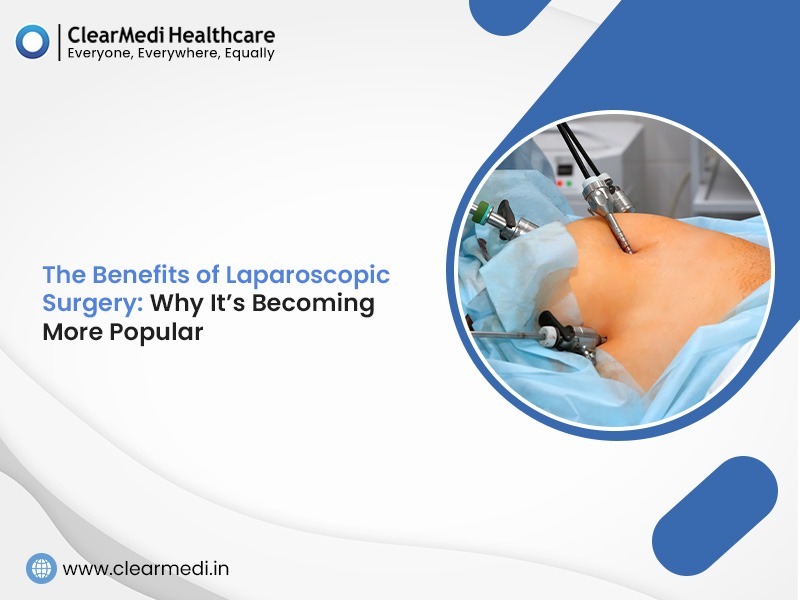
Hernia repair laparoscopic surgery is a minimally invasive procedure, which means the surgeon will make small incisions and utilize a camera and specialized instruments to do the repair. Mesh can be added in that weakest region to strengthen it.
Laparoscopic hernia repair can be considered for qualified patients; however, not all hernias are suited for this procedure. Previous abdominal surgery, the complexity of the hernia, and other health issues may influence the decision.
The surgeon will discuss the pros and cons of each strategy and provide a treatment recommendation. ClearMedi offers hernia repair as one of its services in general and laparoscopic surgery. The precise method to be used and to be available to an individual patient should be explained during consultation.
This normally includes planning, operation, and observation after operation.
The patient has a medical examination and may be directed to do appropriate investigations. The surgical team will assess medications, allergies, and current health problems. Fasting guidelines and other preparations are discussed in advance.
The operation is performed under the type of anesthesia chosen by the treating team. The surgeon then pushes the bulging tissue back in place, repairing the weaker area with the planned approach. The timing and the details will differ, depending on the hernia and how complicated the repair is.
The patient is observed while recovering from the anesthetic. Your care team will advise you on pain management, wound care, mobility, and follow-up. The discharge plan is based on the operation and the patient’s recuperation.
Each person recovers differently. The type of operation, the extent of the hernia, and general health can also impact how quickly someone gets back to their routine.
Patients should adhere to the surgeon’s instructions regarding wound care and prescribed medications. Keeping the incision clean and dry is essential advice for minimizing the chance of infection. Encourage gentle movement but avoid heavy lifting and intense activities unless cleared by the treating doctor.
If there is growing pain, redness, swelling, drainage from the wound, or fever, contact the care team. Immediate evaluation is necessary for sudden, acute stomach pain, persistent vomiting, or other emergency symptoms.
Follow-up appointments allow the doctor to check on recovery and tell you when you can return to normal activities. “Don’t compare your recovery to someone else's, as everyone needs different things,” she said.
Hernia repair is a routinely conducted procedure; however, there are the possible hazards of any treatment. These can be:
The risk of complications may depend on the patient's condition, the type of hernia and the surgical method. Smoking and certain medical disorders or past surgeries can potentially impact the risk of surgery.
A chat with the surgeon can provide patients with information about the hazards relevant to their situation and the ways in which they are managed.
The general surgery department of ClearMedi Healthcare in Noida offers hernia repair as one of the services provided. The company’s advertised service information covers the treatment of inguinal, umbilical, and incisional hernias, as well as general and laparoscopic surgery.
ClearMedi Healthcare consultation, diagnosis, treatment planning, pre-operative assessment, surgery, post-operative observation, pain management, recovery advice, and follow-up the patient-care process
The diagnostic services are listed at the Noida General Surgery site. These are ultrasound, CT, MRI, X-ray, and laboratory tests. The need for any investigations will depend on the patient’s condition and on the treatment team’s assessment.
Patients can discuss their symptoms, diagnosis, and appropriate surgical alternatives with the care team before deciding on treatment. The recommendation of the procedure and customized care plan is guided by clinical evaluation.
People interested in hernia care may also want to check out these related services from ClearMedi:
You can learn more about the surgical services we provide on these sites. The healthcare staff needs to ensure that a given procedure is available and appropriate.
A hernia has to be checked out if a swelling forms, becomes uncomfortable, or begins to impede daily activities. Understanding the type of hernia and the available treatment options can help patients make informed decisions regarding surgery and recovery.
ClearMedi Healthcare provides general surgery services in Noida, including hernia surgery. Patients may call the hospital to discuss their symptoms and schedule an assessment. To book an appointment with ClearMedi Healthcare, please call +91 9599565977.
FAQ



I recently found myself under your care for a cancer issue. While there, accompanied by my wife, we found that the entire staff at ClearMedi Hospital was exceedingly professional and efficient, from your E.R. receptionists to the cardiac care team. Very proud of your outstanding staff and service.
Sonia Chauhan
I was recently cared for at ClearMedi Hospital following a heart attack. I just wanted to say a few words about the exceptional care I received in the ClearMedi Hospital Cardiac Care Unit and the ICU. All of the doctors and nurses were friendly, pleasant, kind, thorough, conscientious and professional. I am happy to have been in their care.
Purab Singh
I am writing on behalf of my brother who was a patient in your hospital. I would like to thank you on behalf of my entire family for the help and consideration shown to me in what was a very difficult time. Again, I would like to thank you for the services you provide to patients and their families.
Deepal Sinha© Copyright 2026, ClearMedi. All rights reserved.





 Call: 9599565977
