
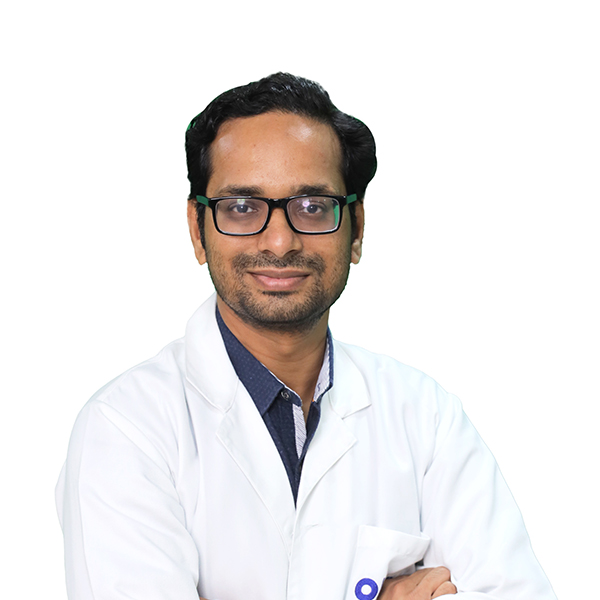
Consultant - Department of Gastrointestinal & Surgical Oncology
Experience: 12+ Years
PrimaCare Clearmedi Multispeciality Hospital,Sector 104, Noida
A hernia occurs when your internal organ or tissue pushes through a weak spot in the surrounding muscle or connective tissue. It is most often found in your belly, groin, or diaphragm and may manifest as a protrusion, swelling, heaviness, or discomfort. Some hernias are painless, while some are more prominent when coughing, lifting, bending, or exercising.
Early medical assessment can assist in identifying your type and severity of the problem and whether observation or surgery is suitable. ClearMedi Healthcare ensures hernia treatment in Noida, which includes your clinical examination, diagnostic support, personalized therapy regimens, and surgery as per the state of the patient.
The internal organs are supported and protected by your abdominal wall. A weak spot in this wall might develop, and a bulge may result when tissue from inside your abdomen pushes outside. This bulge may be more noticeable while a person is standing, coughing, straining, or lifting a heavy object. Some hernias are congenital; others develop over time owing to aging, past surgery, recurrent physical strain, chronic coughing, constipation, or increased abdominal pressure. Symptoms vary depending on where your hernia is and how large it is. A hernia does not usually get fixed for good because your underlying weakness is still there. A medical evaluation determines whether the issue requires monitoring, lifestyle changes, or surgical treatment.
The types of hernia you have are classified according to their location and the tissue that is involved. Common varieties include:
The recommended treatment depends on your hernia's location, size, symptoms, and risk of complications.
A hernia may develop when your weakened tissue is exposed to increased pressure. Several factors can contribute to its formation, including:
The inguinal ligament is a band of connective tissue located in the groin. Its relationship with nearby structures is important when doctors assess and manage certain groin hernias.
Hernia symptoms vary depending on the affected area and whether the protruding tissue can move freely. Common signs may include:
Specific umbilical hernia symptoms may include swelling around your belly button, tenderness, and discomfort while coughing or straining. A swelling that becomes firm, severely painful, discoloured, or impossible to push back requires urgent medical attention.
You should seek medical advice if you notice a persistent lump, unexplained abdominal swelling, or discomfort in the groin. A hernia specialist in Noida can examine your affected area and determine whether further investigation or treatment is required.
Medical evaluation becomes particularly important when:
Severe pain accompanied by vomiting, abdominal swelling, or a discoloured lump may indicate a serious complication in you. Emergency medical care should be sought in such situations.
Diagnosis usually begins with a physical examination and a review of your medical history. The doctor may assess your swelling while you stand, cough, or strain.
Depending on the examination findings, investigations may include:
The doctor decides whether imaging is necessary based on your symptoms, physical findings, and the patient's overall health.
The suitable hernia treatment depends on the type of hernia, symptom severity, general health, and risk of complications.
Small hernias that cause little or no discomfort can be watched by regularly seeing your doctor. The doctor checks to see if the swelling, discomfort, or other symptoms are getting worse or better. Follow observation only if your health care specialist recommends it.
Certain measures may help reduce pressure on the abdominal wall and manage contributing factors. These may include:
Lifestyle changes may help manage symptoms but cannot permanently close the weakened area.
Surgery may be advised if the hernia is causing ongoing pain, getting bigger, interfering with your day-to-day life, or is at risk of causing complications. The misplaced tissue is moved back into position, and the weak area is reinforced. Mesh may be employed in some instances.
The doctor chooses the method based on the patient’s health, area of the hernia, and chance of its recurrence.
Laparoscopic hernia surgery in Noida is a minimally invasive operation in which a camera and specialized equipment are placed through small incisions. Depending on the type of hernia, prior surgeries, and overall medical status, it may be suitable for some people.
The advantages, disadvantages, and limits of this technique should be reviewed with the treating surgeon. Not for every patient.
Treatment of hiatal hernia depends on the symptoms and the occurrence of complications. Medical care may include dietary modifications, timing of meals, weight control, and medications for reflux-associated symptoms. Surgery can be recommended for selected patients with chronic symptoms or consequences.
Patients with an umbilical hernia requiring surgery may be recommended for umbilical hernia repair based on the extent of the defect, symptoms, and risk of consequences. Before the procedure, the surgeon discusses the recommended approach, estimated recovery, and possible dangers.
Although some hernias remain stable, others can lead to complications when the protruding tissue becomes trapped or loses its blood supply.
Sudden severe pain, repeated vomiting, a darkened swelling, or an inability to pass stool or gas requires immediate medical assessment.
Patients searching for the hospital for hernia treatment in Noida should consider the experience of the surgical team, diagnostic facilities, treatment options, safety standards, and follow-up services.
ClearMedi Healthcare offers a structured approach that may include:
Treatment recommendations are based on the patient's medical condition and individual requirements.
The treatment journey generally involves the following steps:
Recovery varies according to the procedure, hernia location, and the patient's general health. Patients should follow all postoperative instructions provided by their surgeon.
For a proper evaluation, if you have abdominal swelling, groin discomfort, or a chronic bulge, see a hernia doctor in Noida at ClearMedi Healthcare. Patients undergoing hernia surgery in Noida can consult the treating team to learn about the methods available, what to expect after the surgery, and the risks involved. The suggested approach will depend on the location of the hernia, its severity, and the individual’s medical needs. For more professional advice on hernia treatment in Noida, visit ClearMedi Healthcare, Sector 104, Noida. Visit our website or call +91 9599565977 to book your appointment.
FAQ




I recently found myself under your care for a cancer issue. While there, accompanied by my wife, we found that the entire staff at ClearMedi Hospital was exceedingly professional and efficient, from your E.R. receptionists to the cardiac care team. Very proud of your outstanding staff and service.
Sonia Chauhan
I was recently cared for at ClearMedi Hospital following a heart attack. I just wanted to say a few words about the exceptional care I received in the ClearMedi Hospital Cardiac Care Unit and the ICU. All of the doctors and nurses were friendly, pleasant, kind, thorough, conscientious and professional. I am happy to have been in their care.
Purab Singh
I am writing on behalf of my brother who was a patient in your hospital. I would like to thank you on behalf of my entire family for the help and consideration shown to me in what was a very difficult time. Again, I would like to thank you for the services you provide to patients and their families.
Deepal Sinha© Copyright 2026, ClearMedi. All rights reserved.





 Call: 9599565977
