
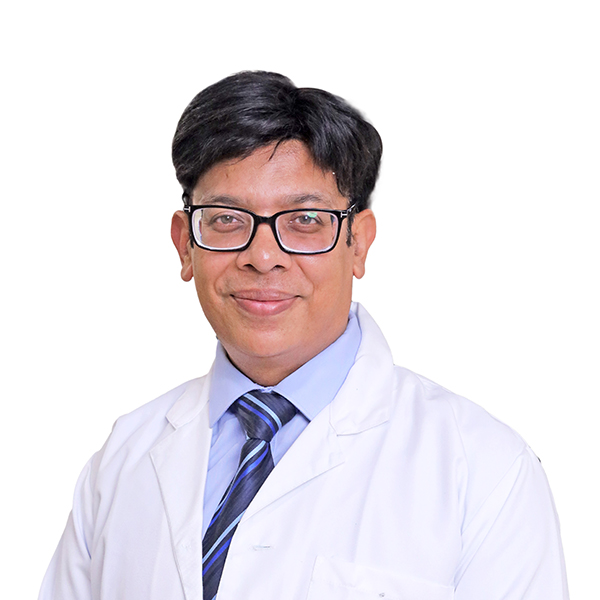
Senior Consultant - Orthopedics & Joint Replacement
Experience: 21+ Years
PrimaCare Clearmedi Multispeciality Hospital,Sector 104, Noida
Brain cancer is the formation of an unusual and unnecessary growth of cells that creates a mass or lump. Brain tumours can distort and interfere with normal brain function and affect how the body functions. ClearMedi has a very comprehensive understanding of how complex neural pathways work and how to deliver effective, evidence-based medical treatment.
Since there is the potential for brain tumours to interfere with the body's neuromuscular system, ClearMedi combines advanced technology for neuro-diagnostic testing and established treatment options to achieve the possible outcome for each patient.
ClearMedi Healthcare is an advanced oncology treatment for brain cancer patients and places a high priority on the long-term preservation of the brain. ClearMedi Healthcare employs a team of oncologists, a neurosurgeon for brain cancer in Noida, and specialists who have unique training and expertise in treating brain cancer. Working together as a versatile team, ClearMedi Healthcare ensures your treatment plan is customised and appropriate for your unique situation.
Brain cancer occurs as a result of abnormal structures inside the skull multiplying without interruption and creating an expanding brain tumor treatment in Noida-like mass. These tumor-like masses often disrupt important neural functions, including the ability to remember, move, speak clearly, and see on the sides of your eyes.
Intracranial tumors (tumors that occur in the skull) are mostly classified according to their tissue of origin:
Brain tumors are generally classified according to the following criteria by brain cancer specialists in Noida :
Tumors located within the skull, or intracranial masses, include many different tumor types with distinct pathologic characteristics. ClearMedi Healthcare performs diagnostic sorting for all brain tumor symptoms:
Even though there is much research still being performed on how the cellular processes for initiating primary oncogenesis are established, they certainly involve genetic alterations (mutations) within the DNA of cells:
Although there are very few examples of a clear environmental cause, there are many other things that can increase the chance of developing a condition:
1. Ionizing radiation: Therapeutic exposure to an ionizing form of radiation will greatly increase the likelihood of developing a primary brain tumor.
2. Genetic syndromes: Certain inherited (or congenital) disorders can strongly predispose an individual to develop a primary brain tumor. Examples of inherited conditions that can predispose an individual include: neurofibromatosis (1 and 2) and Li-Fraumeni syndrome.
3. Demographics: While a primary brain tumor can occur at any age, certain types have certain age distributions, e.g., Children are much more likely to develop medulloblastomas; adults are more likely to develop gliomas.
Signs and symptoms associated with intracranial tumors can differ substantially based upon the mass size, the pace of edema surrounding the mass, and the area of brain that is being compressed by the mass.
Some common presentations of these tumors include:
In evaluating generalized symptoms of brain tumors or, more broadly, head cancer symptoms, structural lesions may show up as focal neurological signs, such as blurred vision or the inability to see to the side (peripheral vision) and problems with the ability to see in three dimensions (spatial coordination). Detecting these changes as soon as possible allows neurosurgeons and neurologists to distinguish between true neoplasms and other non-cancerous brain lesions that may show up on imaging, including vascular malformations and localized infectious lesions.
Getting to a successful conclusion depends heavily on early, accurate diagnostic tests. To achieve this goal, ClearMedi Healthcare employs a multi-step, integrated approach to the diagnostic process that involves a team of neurologists, neurosurgeons and neuroradiologists who are exclusively dedicated to this area:
To diagnose the brain, the first step is taking a thorough history and doing a thorough neurologic exam. The neurologist will be looking for changes in the 12-cranial nerves (in the head), strength of the extremities/motor strength, balance, and cognitive function. These findings will help the neurologist determine where there is a structural problem.
A biopsy is usually required to verify an imaging diagnosis by obtaining a tissue sample from the patient. Biopsies are performed using stereotactic imaging or open surgical resection. Tissue samples are processed for histological evaluation to get the precise histological grade. Molecular markers, including IDH mutations and MGMT methylation status, are also identified by pathologists at ClearMedi Healthcare to assist oncologists in selecting targeted therapies for the patient.
ClearMedi Healthcare offers complete care for patients with cancer through a combination of the latest technologies in traditional surgery and various forms of targeted medical treatments and/or radiation therapy.
Often the first step in treating brain tumors that can be removed surgically is by performing a surgical procedure (craniotomy), where a portion of the skull is opened and an attempt will be made to surgically remove as much of the tumor as possible while preserving surrounding normal brain tissue. ClearMedi specializes in performing state-of-the-art neurosurgical procedures by using advanced surgical suites to perform numerous complex surgical procedures which include:
Craniotomy: This allows for surgical access to the brain via a temporary opening in the skull.
Awake Craniotomy: This is beneficial in terms of surgically accessing tumors that are near functional areas of the brain (i.e. language areas), as this allows them to perform neurological testing on the patient while they are being surgically operated on, verifying the patient's anatomical structures that are critical for normal brain function.
Endoscopic Skull-Base Surgery: This technique uses specially designed endoscopes inserted through the nose to remove pituitary tumors or other lesions from the area of the skull base while minimizing damage to surrounding normal brain tissue.
Radiation therapy uses very precise and accurate delivery of highly focused, highly energized beams of radiation to kill leftover cancer cells after surgery or treat inoperable tumors. Advanced treatment techniques include:
Chemotherapy: The use of alkylating agents, like oral Temozolomide (TMZ), to destroy cancerous cells by affecting their ability to divide at all stages and across the blood-brain barrier.
Targeted Drug Therapy: Drugs that block or interfere with certain molecular changes in the cells they affect or inhibit the development of the new blood vessels that tumors require for growth and metastasis.
In order to manage a brain tumor well, it is important to track complications due both to the tumor itself and from treatments that are too much or ineffective:
To manage complex intracranial conditions, you will need a complete and integrated healthcare system as well as specialty-trained professionals.
ClearMedi Healthcare provides a comprehensive and patient-centered environment for clinical care:
If you or a loved one has been diagnosed with a brain tumor or is experiencing neurological symptoms, seek timely medical guidance from the specialists at PrimaCare ClearMedi Multispeciality Hospital, Block A, Sector 104, Noida, Uttar Pradesh 201304.
Our team can help with diagnostic evaluation, treatment planning, neurosurgical care, and other treatment options based on the type and characteristics of the brain tumor.
Call +91 9599565977 to book a consultation for brain cancer treatment in Noida.
FAQ





I recently found myself under your care for a cancer issue. While there, accompanied by my wife, we found that the entire staff at ClearMedi Hospital was exceedingly professional and efficient, from your E.R. receptionists to the cardiac care team. Very proud of your outstanding staff and service.
Sonia Chauhan
I was recently cared for at ClearMedi Hospital following a heart attack. I just wanted to say a few words about the exceptional care I received in the ClearMedi Hospital Cardiac Care Unit and the ICU. All of the doctors and nurses were friendly, pleasant, kind, thorough, conscientious and professional. I am happy to have been in their care.
Purab Singh
I am writing on behalf of my brother who was a patient in your hospital. I would like to thank you on behalf of my entire family for the help and consideration shown to me in what was a very difficult time. Again, I would like to thank you for the services you provide to patients and their families.
Deepal Sinha© Copyright 2026, ClearMedi. All rights reserved.





 Call: 9599565977
