Emergency
Contact for
Emergency

Write to CEO

Heart Attack Treatment in Noida, India

To Book An Appointment ☎ Call Us +91 9599565977

Meet Our Expert Medical Team

OR

Get in Touch for Expert Medical
Assistance Anytime

Heart Attack Treatment in Noida

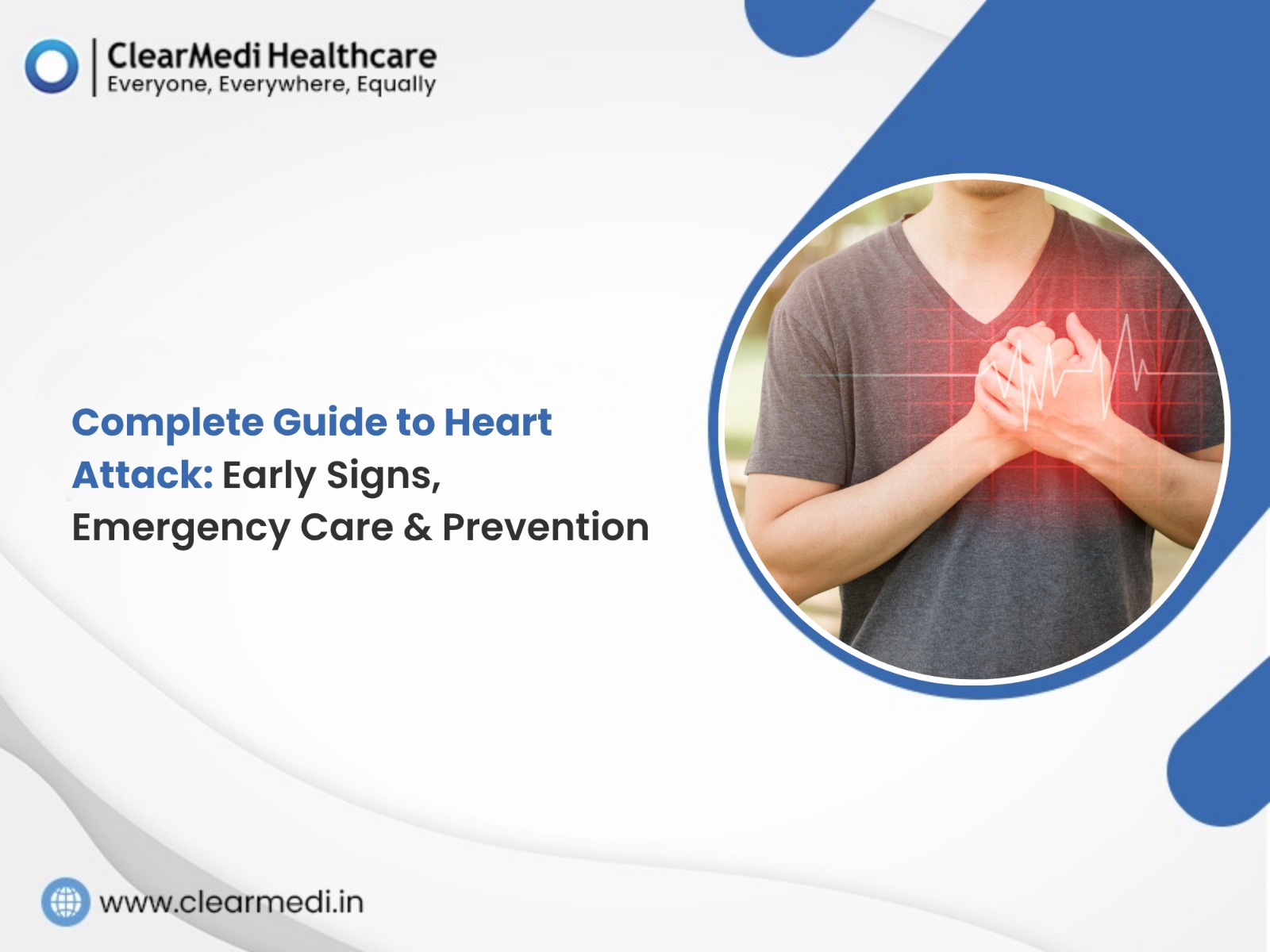
A heart attack happens when the blood supply to a portion of the heart is interrupted or greatly decreased. This is a medical emergency and needs rapid diagnosis and treatment to limit damage to the heart muscle and lessen the chance of significant repercussions. Heart attack treatment in Noida includes cardiac examination, emergency management, and specialist care, depending on the kind and severity of the heart attack. Medications, angioplasty, stent implantation, bypass surgery, and cardiac rehabilitation are treatment options. If you can recognize the signs of a heart attack and seek medical help immediately, you can increase your chances for a better outcome.

What Is A Heart Attack?

Myocardial infarction (MI), often known as a heart attack, is the death of heart muscle tissue due to lack of blood supply to a segment of the heart. This is usually triggered when a blood clot forms on a burst fatty plaque inside a coronary artery.

If the heart muscle does not get enough oxygen, tissue damage can develop, and if blood flow is not restored soon, it can become irreversible. Common symptoms include chest pain or pressure, shortness of breath, perspiration, nausea, dizziness, and discomfort that may radiate to the arm, shoulder, jaw, neck, or back.

The symptoms are not always the same in each person. Older persons, women, and people with diabetes could have unusual symptoms. Getting an early evaluation by a heart attack doctor in Noida will help you establish the cause and the right treatment for you.

What Are The Types Of Heart Attacks?

The main types of MI include:

  • STEMI: Usually occurs when a coronary artery is completely or almost completely blocked and produces characteristic changes on an ECG. It generally requires urgent restoration of blood flow.
  • NSTEMI: Occurs when blood flow to the heart muscle is significantly reduced, usually because of a partial blockage. ECG changes differ from those seen in STEMI.
  • Silent heart attack: May cause few or no obvious symptoms and can sometimes be discovered later through medical testing.
  • Type 2 myocardial infarction: Can occur when the heart's oxygen supply and demand become imbalanced because of another serious medical condition.

The type of heart attack helps doctors determine the urgency and most appropriate treatment.

What Are The Causes And Risk Factors Of A Heart Attack?

Some common causes and risk factors include:

  • Blockage of coronary arteries due to fatty plaque
  • High blood pressure
  • High cholesterol
  • Smoking or tobacco use
  • Diabetes
  • Being overweight or having obesity
  • Physical inactivity
  • Unhealthy dietary habits
  • Increasing age
  • Family history of heart disease
  • Previous heart disease or heart attack
  • Certain chronic medical conditions

Managing blood pressure, cholesterol, blood sugar, body weight, and tobacco use can help reduce cardiovascular risk.

What Are The Symptoms Of A Heart Attack?

Common heart attack symptoms in women and men include:

  • Chest pain, pressure, tightness, squeezing, or discomfort
  • Pain or discomfort spreading to the arm, shoulder, jaw, neck, or back
  • Shortness of breath
  • Cold sweating
  • Nausea or vomiting
  • Dizziness or light-headedness
  • Unusual weakness or fatigue
  • Palpitations or an irregular heartbeat

Women may experience symptoms that are less typical, including unusual fatigue, breathlessness, nausea, or discomfort in the back or jaw. Silent heart attack symptoms may be mild or absent, meaning the person may not realise that a heart attack has occurred.

If someone suddenly collapses, becomes unresponsive, and is not breathing normally, this may indicate cardiac arrest and requires immediate emergency assistance.

When Should You Visit A Cardiologist?

You should seek immediate medical attention rather than wait for a routine consultation if you experience symptoms that may indicate a heart attack, including:

  • New or severe chest pain or pressure
  • Difficulty breathing 
  • Pain spreading to the arm, jaw, neck, shoulder, or back
  • Cold sweating with chest discomfort
  • Sudden dizziness or fainting
  • Unexplained nausea with other heart-related symptoms

People with high blood pressure, high cholesterol, diabetes, known coronary artery disease, or a previous heart attack should also maintain regular cardiology follow-up.

If you are looking for a cardiologist for heart attack in Noida, remember that suspected heart attack symptoms require emergency assessment rather than waiting for a scheduled appointment.

How Do Doctors Diagnose A Heart Attack?

Doctors use several tests to determine whether a heart attack has occurred and assess its severity:

  • Medical history and physical examination: Doctors review symptoms, risk factors, vital signs, and medical history.
  • MI ECG: An electrocardiogram records the heart's electrical activity and can identify changes associated with myocardial infarction.
  • Blood tests: Cardiac troponin levels are commonly measured to detect heart muscle injury.
  • Echocardiogram: Ultrasound imaging can assess heart function and identify areas of abnormal movement.
  • Coronary angiography: This procedure helps identify narrowed or blocked coronary arteries.
  • Chest X-ray: May be used to evaluate the heart and lungs or investigate other causes of symptoms.
  • CT coronary angiography: May be considered in selected situations to visualise the coronary arteries.

The diagnosis is based on the overall clinical picture, ECG findings, blood tests, and other investigations rather than one test alone.

What Are The Treatment Options For A Heart Attack?

Treatment depends on the type of heart attack, location and severity of the blockage, time since symptoms began, and the patient's overall health.

  • Medicines: Doctors may prescribe antiplatelet medicines, anticoagulants, statins, nitrates, and other medicines as clinically appropriate. Heart attack medicine should only be taken according to medical advice.
  • Angioplasty or PCI: A catheter-based procedure can restore blood flow through a narrowed or blocked coronary artery, often using a stent.
  • Thrombolytic therapy: Clot-dissolving medicines may be used for selected patients when urgent PCI is not available or appropriate.
  • Coronary artery bypass grafting (CABG): Bypass surgery may be recommended for certain patients with multiple, complex, or otherwise unsuitable coronary blockages.
  • Oxygen therapy: May be given when blood oxygen levels are low, or the patient has breathing difficulties.
  • Cardiac rehabilitation: A structured programme involving exercise, nutrition, risk-factor management, medication guidance, and lifestyle support can help with recovery.

For patients seeking heart attack treatment in Noida, treatment should be determined by a qualified cardiology team after urgent evaluation.

What Are The Complications Of A Heart Attack?

A heart attack can cause serious complications, particularly when treatment is delayed or the heart muscle is extensively damaged . Possible complications include:

  • Permanent damage to the heart muscle
  • Heart failure
  • Abnormal heart rhythms or arrhythmias
  • Cardiogenic shock
  • Cardiac arrest
  • Damage to the heart muscle or valves
  • Formation of blood clots and increased risk of stroke
  • Another heart attack
  • Reduced exercise capacity and persistent fatigue

Prompt treatment can reduce the risk of severe complications.

Why Choose ClearMedi, Noida, For Heart Attack Treatment?

ClearMedi Healthcare, Sector 104, Noida, is a multi-specialty hospital that provides emergency assessment, cardiac evaluation, diagnostic testing, treatment, and follow-up care. Patients looking for a heart attack hospital in Noida can avail the benefit of integrated care of cardiology, emergency medicine, critical care, diagnostics, and other pertinent disciplines. The hospital offers cardiac investigations and critical care support, with the therapy depending on the clinical status of the patient. Things to Look for in the Hospital for Heart Attack Treatment in Noida for Patients: Comparing options, emergency services and cardiology expertise; diagnostic services, critical-care support, continuity of care

What Is The Treatment Process For A Heart Attack?

The treatment process generally involves:

  • Emergency assessment: Symptoms, vital signs, and medical history are assessed promptly.
  • ECG and blood tests: These help confirm or rule out a heart attack and assess heart muscle injury.
  • Immediate treatment: Appropriate medicines are given based on the diagnosis.
  • Coronary evaluation: Angiography may be performed to identify a blocked or narrowed artery.
  • Angioplasty or surgery: PCI with stenting or bypass surgery may be required depending on the blockage.
  • Monitoring: Patients may need monitoring in an ICU or cardiac-care unit.
  • Recovery and rehabilitation: Medicines, cardiac rehabilitation, lifestyle changes, and follow-up are planned to reduce future cardiovascular risk.

Consult Our Cardiology Specialists Today

If you or someone around you develops chest pressure, severe breathlessness, sweating, fainting, or pain spreading to the arm, jaw, back, or shoulder, seek emergency medical care immediately. At ClearMedi Healthcare, Sector 104, Noida, patients can receive urgent cardiac evaluation and appropriate treatment. For heart attack treatment in Noida, contact ClearMedi at +91 9599565977.

Book Appointment | Call Now | WhatsApp

FAQ

Your Health Questions Answered Here

These are search queries with public figures and heart -related phrases. Just because you type in a search term doesn’t mean that a particular person has had a heart attack. Health information should come from trusted medical sources and verified, confirmed reports, not from online search associations.

Often, the risk can be lowered by taking prescribed medicines, avoiding tobacco, following a heart-healthy diet, keeping regular physical activity, and lowering blood pressure, cholesterol, and diabetes.

Recovery depends on the level of heart injury, treatment received, underlying health issues, and overall fitness. Prescribed drugs, cardiac rehabilitation, and follow-up treatment can help recovery.

Some heart attacks can be treated with drugs and catheter-based treatments such as angioplasty and placing stents. Others may need bypass surgery. The management relies on the coronary arteries and the state of the patient.

Seek emergency attention right away if you have new or severe chest pressure, dyspnea, cold sweating, fainting, or discomfort extending to the arm, jaw, back, or shoulder. Don't wait until symptoms are worse.

A heart attack happens when blood flow to a section of the heart muscle is interrupted. Cardiac arrest is the sudden cessation of the heart’s ability to pump blood properly. A heart attack can sometimes lead to cardiac arrest, although the two are not the same.

Symptoms can include chest pressure or pain, shortness of breath, sweating, nausea, dizziness, and pain or discomfort that spreads to the arm, jaw, back, neck, or shoulder. Symptom severity varies from person to person.

Our Blogs

What Our Patient Say About Us

Condition & Treatment in Location


Speciality in Location