Urology and Kidney Date: 15 Jun 2026
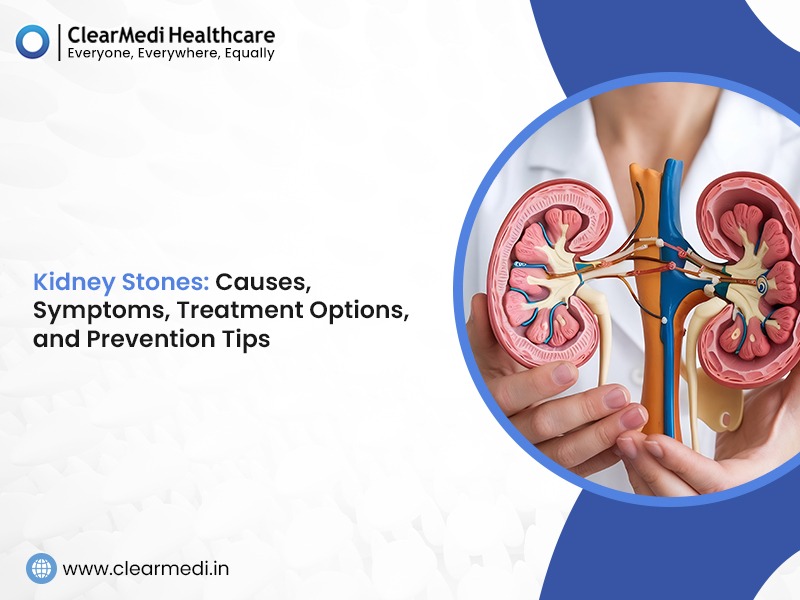
Kidney stones are hard, crystal-like masses that form from minerals, acids, and salts inside the urinary tract. They may be very small, like a grain of sand, or rarely, larger than a golf ball. They are also called renal calculi or nephrolithiasis.
Many small stones pass through urine on their own, but larger stones may get stuck in the ureter, block urine flow, cause severe pain, bleeding, or affect kidney function. Some stones may take up to three weeks to pass naturally.
Around 1 in 10 people may develop kidney stones during their lifetime. They are more common in men, especially in their 30s and 40s.
The main symptom is pain in the lower back, belly, or side. The pain may spread from the side toward the groin and can come in waves.
Other symptoms include:
| Symptom | Meaning |
| Nausea and vomiting | May happen due to severe pain |
| Blood in urine | Urine may appear pink, red or brown |
| Pain while urinating | Burning or discomfort during urination |
| Inability to urinate | Can indicate blockage |
| Frequent urge to urinate | Feeling the need to pee often |
| Fever or chills | May indicate infection |
| Cloudy or foul-smelling urine | Possible infection or urinary issue |
Small stones may sometimes cause no symptoms.
Kidney stones form when urine contains too many minerals, salts, or acids and not enough fluid. These particles can stick together and form crystals. Over time, crystals may grow into stones.
Common substances involved include:
| Substance | Related Stone Type |
| Calcium | Calcium oxalate/calcium phosphate stones |
| Oxalate | Calcium oxalate stones |
| Uric acid | Uric acid stones |
| Cystine | Cystine stones |
| Infection-related minerals | Struvite stones |
These are the most common types. Calcium oxalate stones may form when a person does not drink enough fluids or consumes high-oxalate or low-calcium foods.
These may form due to high intake of animal protein such as beef, poultry, pork, eggs, and fish.
These are linked with bacterial infections. Repeated infections can sometimes lead to very large stones called staghorn calculi, which often require surgical removal.
These are caused by an inherited condition called cystinuria, where cystine builds up in the urine.
A person may have a higher risk of kidney stones if they:
| Risk Factor |
| Do not drink enough fluids |
| Eat too much meat or protein-rich food |
| Consume foods high in sodium or sugar |
| Take vitamin C supplements |
| Have a family history of kidney stones |
| Have urinary tract blockage |
| Have had stomach or intestinal surgery |
| Take certain medicines, such as some diuretics, calcium-based antacids or anti-seizure medicines |
| Have certain medical conditions |
Clearmedi lists several conditions that may increase kidney stone risk, including diabetes, gout, high blood pressure, obesity, inflammatory bowel disease, osteoporosis, kidney cysts, parathyroid disease and cystinuria.
Kidney stones can increase the risk of:
| Complication | What It Means |
| Hydronephrosis | Urine backs up and causes kidney swelling |
| Kidney infection | Infection in the kidney |
| Acute kidney injury | Sudden kidney function problem, sometimes reversible |
| Frequent UTIs | Repeated urinary tract infections |
| Chronic kidney disease | Long-term kidney damage risk |
Doctors may diagnose kidney stones using:
| Test | Purpose |
| Urine test | Checks for blood, crystals, and infection |
| Imaging | X-ray, CT scan, or ultrasound to locate stones |
| Blood tests | Checks kidney function, infection, and calcium levels |
These tests help identify the size, number, shape, and location of stones.
Treatment depends on stone size, location, symptoms, and whether there is infection or blockage.
Small stones may pass naturally. Doctors may recommend monitoring, drinking fluids, and using medicines for pain, nausea, or to help the ureter relax.
Medicines may include:
| Medicine Type | Purpose |
| Ureter relaxers | Help the stone pass more easily |
| Pain medicines | Manage severe discomfort |
| Anti-nausea medicines | Control nausea and vomiting |
Clearmedi mentions tamsulosin and nifedipine as examples of medicines that may help relax the ureter.
Procedures may be needed if the stone cannot pass, causes blockage, or causes complications.
| Procedure | How It Works |
| Shockwave lithotripsy | Uses shockwaves to break stones into smaller pieces |
| Ureteroscopy | A scope is inserted through the urinary tract to break or remove the stone |
| Percutaneous nephrolithotomy | A tube is inserted through a small back incision to remove stones from the kidney |
| Laparoscopic surgery | Small incision surgery to remove the stone; open surgery is rare |
Yes. Clearmedi states that around 80% of kidney stones may pass naturally. Stones smaller than 4 mm may pass within one to two weeks. Larger stones may take two to three weeks. Once a stone reaches the bladder, it often passes within a few days.
Medical evaluation is important because stones can cause blockage or complications. Follow-up is recommended if a stone does not pass within four to six weeks.
Many small stones pass without procedures, but larger stones or stones blocking urine flow may need medical treatment. People who have had kidney stones are more likely to get them again in the future. Prevention may require diet changes and sometimes medicine.
To reduce the risk of kidney stones, doctors may recommend:
| Prevention Method |
| Drink plenty of water |
| Limit animal protein |
| Limit high-sugar and high-sodium foods |
| Limit high-oxalate foods if prone to calcium oxalate stones |
| Maintain a healthy weight |
| Eat calcium-rich foods instead of relying on calcium supplements |
| Take preventive medicines if prescribed |
High-oxalate foods mentioned include spinach, rhubarb, wheat bran, tree nuts and peanuts.
A person should see a healthcare provider if they have symptoms of kidney stones. A doctor can check the stone’s size and location and help prevent complications.
Emergency care is recommended if the pain becomes unbearable or if severe nausea/vomiting occurs.
© Copyright 2025, ClearMedi. All rights reserved.





 Call:
9599565977
Call:
9599565977