General Physician Date: 13 Nov 2025
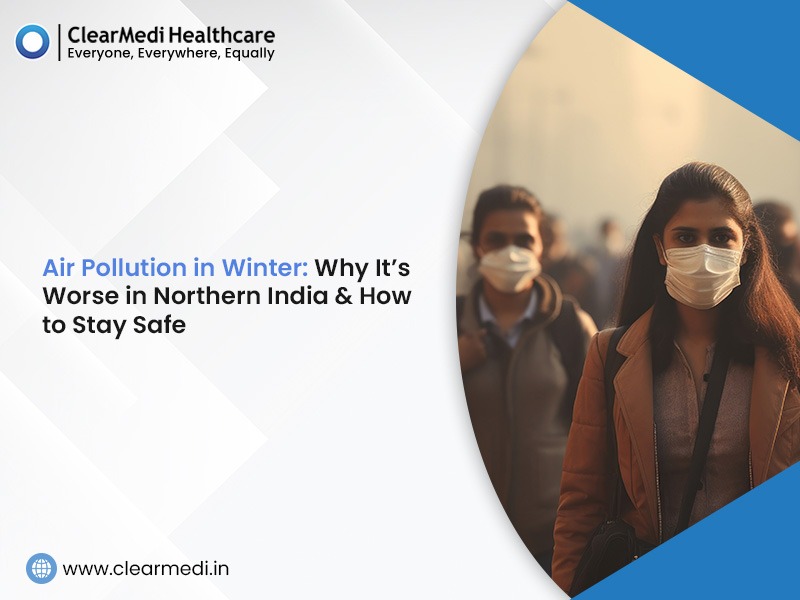
Every winter, it's the same problem. The northern air becomes so polluted that it's almost impossible to see more than a few metres ahead in cities like Delhi, Lucknow, and Chandigarh. These areas are covered in thick smog, which makes breathing a nightmare. In many cities, the air quality index has crossed the level of 400, which signifies that the air quality is rapidly deteriorating. The statistics show that more and more people come to the hospitals for breathing concerns each year. Visit the best chest doctor in Noida for the best diagnosis for breathing problems in winter.
There are several factors contributing to more pollution and terrible air quality in the winter:
(a) Unfavourable Metrology: In winter, the air near the ground becomes cold and weighty, which traps all the smoke and pollution near the ground where we normally breathe.
(b) Burning of the crop waste: In the months of October and November, the farmers in the states of Punjab, Haryana, and Chandigarh burn the standing crops in the fields for the next crop, which produces huge amounts of smoke that can travel to nearby cities. Studies have shown that crop burning widely contributes to Delhi's pollution.
(c) Vehicle emissions: Emissions from vehicles, diesel generators, industrial sources, construction dust, etc, can also be a cause for pollution. Diwali and similar events, when crackers are burnt, are a contributing factor to pollution.
Some sensible evidence-based steps can help in defense from pollution. Such as:
(1) Stay indoors during the peak pollution hours, especially in the morning from 6:00 a.m. to 9:00 a.m.
(2) Choose indoor exercises over outdoor activities, prefer going to a gym, and avoid outdoor workouts like running, jogging, etc.
(3) Avoid high traffic areas, as more pollution occurs in high traffic areas through vehicle emissions.
(4) Use air purifiers like HEPA to improve the air quality inside the house.
(5) Where N95 and N99 masks when you are in the outdoor environment, N95 and N99 masks can help in protection from particulate matter exposure. Ensure to cover your nose and mouth properly with the masks.
More measures that can be taken to reduce air pollution or smog are implementing a public transport day, proper monitoring of the air quality, and protection of vulnerable groups like children and elderly people. Get consultation from the best chest specialist doctor in Noida for more insights.
Please ensure that the mask you choose has the following features:
(a) A claim for PM 0.3 and PM 2.5 filtration.
(b) Proper fitting of the mask around the mouth and the nasal area
(c) A nano-fiber mask for adults and a child mask for children.
(d) The mass should be disposable, or if not, should complete the proper filtration standards.
Experts suggest that the pollution crisis demands an urgent and harmonious action, especially in all the northern States of India. Some of the changes should include :
(1) Massive scaling up of public transport is required.
(2) Practices like walking and cycling should be increased.
(3) Practices like waste segregation and a recycling system should also be encouraged.
(4) Adhere to the WHO Air Quality Guidelines along with the national standards.
(5) More allocation of funds to research programs for studying the pollution-related health impacts.
Our Hospital network is spread across India. From Clearmedi Multi-Speciality Hospital in Mysore to Clearmedi Monark Cancer Hospital in Nanded, and from Clearmedi Paridhi Multispeciality Hospital in Gwalior to Primacare Clearmedi Multispeciality Hospital in Noida, expert care is available. You will also find 24/7 support at Clearmedi DMH Multispeciality Hospital, Varanasi; Clearmedi Bahra Multispeciality Hospital, Kharar; and Clearmedi Radiant Hospital, Mysore.
Winter air pollution has now become a public health emergency, which is affecting millions of people in India. This is more prominent in the northern states, which is potentially causing neurological damage and hypertension disorders. Protective measures should be taken to safeguard our health, and proper monitoring of the AQI levels should be done, as air pollution has also doubled the rate of eye ailments and dementia. Protect yourself, advocate for change, and stay safe, as Every Breath matters.
1: Why does air pollution increase during winter in Northern India?
There are many reasons for the increasing air pollution, especially during the winter in northern India, such as atmospheric stagnation, temperature inversion, trapped emissions, and crop burning in the states of Punjab, Haryana, Uttar Pradesh, etc. The Diwali firecrackers and diesel generators also contribute to the increasing pollution in the winter.
2: How does poor air quality in winter affect our health?
Poor air quality can damage your heart, lungs, brain, and eyes. Studies have shown that pollution has contributed to many eye ailments, dementia, diabetes, hypertension, and other neurological disorders. This happens as the PM 2.5 particles penetrate the blood-brain barrier, which leads to cognitive decline. Children and the elderly face more risks.
3: Which cities in Northern India face the worst air pollution during winter?
Delhi records the highest pollution level, which peaks every year. Other cities include Ghaziabad, Gurgaon, Noida, Hajipur, Chandigarh, Punjab, etc. These cities have a declining rate of air quality as compared to the National air quality standard during winter; these cities also experience synchronised smog episodes.
4: How can individuals protect themselves from air pollution in winter?
There are many ways by which individuals can protect themselves from air pollution in winter, such as staying indoors during the peak pollution hours, wearing N95 and N99 masks, using HEPA filters at home, staying hydrated, and consuming an antioxidant-rich diet to support respiratory health.
5: How can I check real-time air quality levels in my city?
There are many ways to check the air quality index, one of them is by using apps like the Central Pollution Control Board's app "AQI India"; many weather apps also display AQI data. You can monitor these readings regularly. The levels above 201 are considered poor and require protective measures to be taken.
© Copyright 2025, ClearMedi. All rights reserved.




 Call:
9599565977
Call:
9599565977