Emergency
Contact for
Emergency

Write to CEO

Kidney Stone Treatment in Noida, India

To Book An Appointment Call Us +91 9599565977

Overview 

Kidney stones, medically called "nephrolithiasis," can disrupt and damage the natural physiology of the human urinary system, leading to severe pain and possible health issues. ClearMedi Healthcare provides a thorough understanding of the complexities and challenges of kidney stones and offers patients high-quality treatment and outcomes. 

As a leading treatment facility for complete urinary stone treatment in Noida, ClearMedi Healthcare combines advanced medical knowledge with a compassionate approach to provide phenomenal care. Focusing on the health and recovery of patients, the entire team of urologists, nephrologists, and surgeons are trained in the most recent advances in medical technology and can ensure that their patients have an uninterrupted pathway to healing. 

What are Kidney Stones?

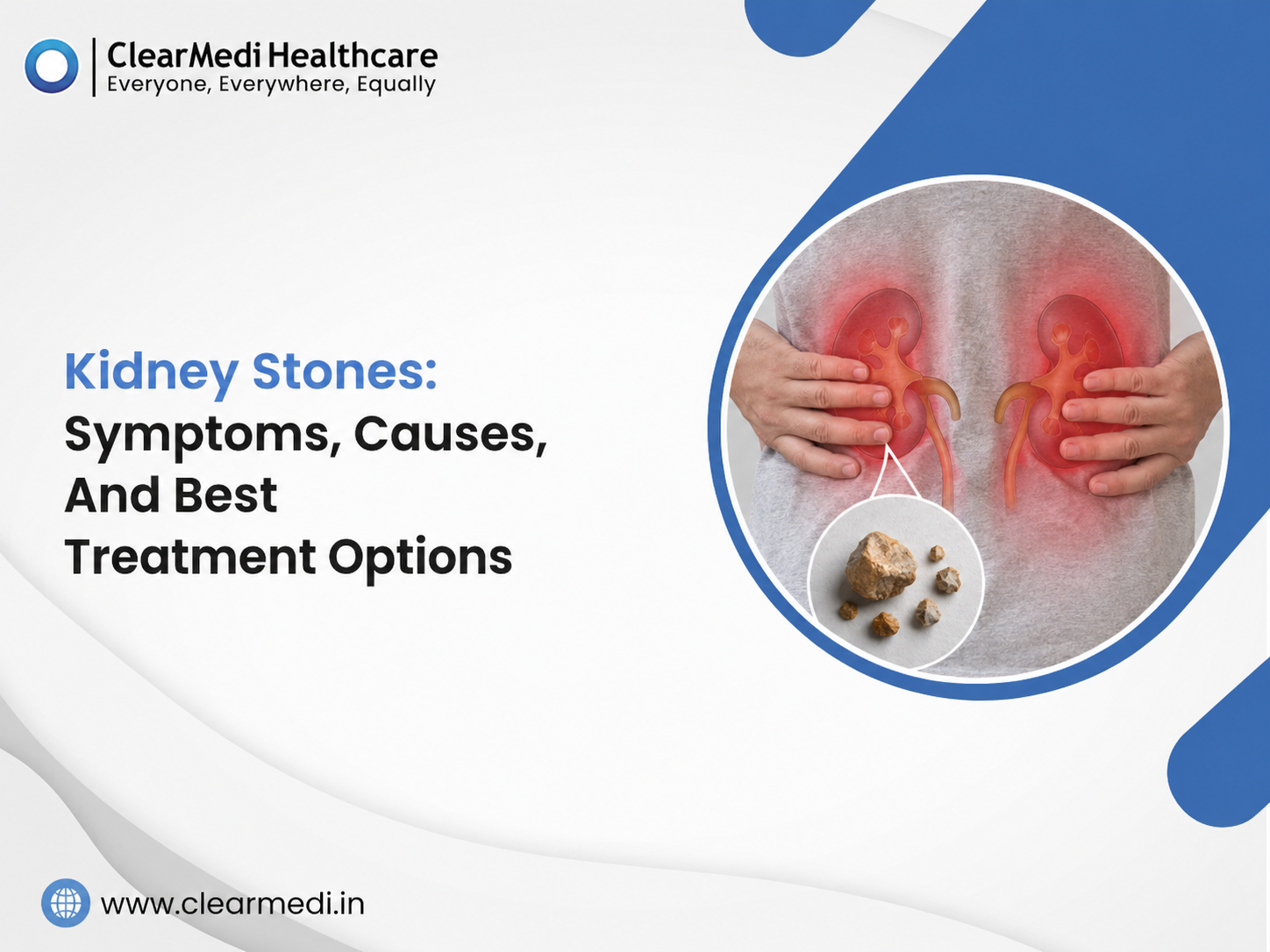
Kidney stones can range from very small to very large. They can form in either one (unilateral) or both (bilateral) kidneys at the same time. Some smaller stones may be formed and eliminated through the urine without any kidney stones symptoms​. 

While kidney stones over a size of 3 mm / (.12 in) can be large enough to block the flow of urine through the ureter, which can cause acute renal colic (or renal colic) as it activates the acute renal colic pain nerve pathways in the flank or lower back, with pain radiating down towards the groin in intermittent timeframes ranging from approximately 20 minutes to 60 minutes. Depending on where kidney stones form in the renal anatomy, they can form in the calyces of the kidney or in the ureter.

If there are kidney stones in both kidneys, it is a condition referred to as bilateral renal calculi or bilateral nephrolithiasis.

Types of Kidney Stones

Based on chemical composition by ClearMedi Healthcare, there are four major groups of kidney stones:

1. The two subgroups of calcium stones are the most common type of kidney stones.

-Calcium oxalate stones.

-Calcium phosphate stones.

2. Uric acid stones form in the presence of excess amounts of uric acid in the urine and are often associated with a high-protein diet or metabolic disorders.

3. Struvite (triple phosphates) or magnesium ammonium phosphates are kidney stones that form as a result of urinary tract infections (UTIs).

4. Cystine stones are uncommon and are related to a genetic disorder that causes the kidneys to release too much of the amino acid cysteine. 

Causes and Risk Factors

Kidney stone formation can be affected by numerous lifestyle and physiological factors, including:

  • Diet: High-oxalate foods (such as spinach, beets, and nuts); high sodium diets; and calcium-deficient diets can all lead to the formation of calcium oxalate crystals in urine.
  • Dehydration: Not drinking enough fluid will lead to concentrated urine, which allows minerals to crystallize.
  • Family History: If a member of your family has had a kidney stone or you receive a diagnosis of a genetic condition, then you may be genetically predisposed to developing kidney stones.
  • Age and Gender: Kidney stones are most commonly seen in individuals aged 30 to 60 years. Men have historically formed kidney stones more frequently than women; thus, understanding the symptoms of kidney stones in women is particularly important for accurate diagnosis.
  • Obesity: Gaining weight can also change the chemical composition of your urine; thus, increasing the likelihood of crystallization.
  • Urinary Tract Abnormalities: Anatomical obstructions and congenital defects can impair proper urine flow.
  • Medical Conditions: Certain medical diseases (such as gout and hyperparathyroidism) may alter the biochemical homeostasis of your body.
  • Medications: Certain diuretics and antacids may change the urine composition and thereby increase the risk of formulating a kidney stone.
  • Lack of Physical Activity: An inactive lifestyle may reduce the amount of calcium excreted in urine, thereby contributing to calcium crystallization.

Signs and Symptoms

The size and location of kidney stones can give rise to varying symptoms according to Clearmedi Healthcare, while often presenting in similar ways:

  • Hematuria: Blood in the urine will usually show the urine’s color as pink, red, or dark brown.
  • Fever and/or chills: Would indicate a possibility of a secondary infection or extreme inflammation.
  • Nausea and vomiting: Caused by both pain pathways from the kidneys and the intestines traveling along the same nerve pathways due to the intense amount of pain.
  • Urine with abnormal appearance: Cloudy, discolored, or foul-smelling.
  • Abdominal and/or flank pain: Aching and/or stabbing pain originating from your back, side, or lower abdomen. 

Gender-Specific Presentations

Despite having the same core symptoms for both genders, kidney stone symptoms in women can frequently be confused with ovarian pain and/or pelvic inflammation; therefore, an examination by a healthcare professional is absolutely necessary.

Potential Complications

The following medical complications may occur if kidney stones are not treated properly by kidney stone surgery​ :

  • Urinary Tract Infections (UTI) - stagnant urine behind a stone provides an environment for bacterial growth
  • Urinary Flow Obstruction - obstruction(s) can result in impaired kidney function and may result in significant localized trauma
  • Hydronephrosis - swelling of the kidney(s) secondary to urine accumulation
  • Sepsis - a serious, systemic body infection caused by urinary tract obstruction and/or infection. Chronic Kidney Disease (CKD) - permanent kidney damage and impaired filtration due to the chronic presence of obstructive kidney stones.

Diagnosing Kidney Stones

An accurate diagnosis consists of three primary components: clinical evaluations, laboratory tests, and advanced imaging technology.

  1. Clinical Evaluation - An evaluation of currently presented symptoms (including pain signatures and changes in urinary function) coupled with a review of the individual’s entire medical history, diet, and fluid intake.
  2. Laboratory Tests - A 24-hour urine test (24-hour urine collection) is performed to evaluate for elevated calcium, uric acid, or evidence of infection. A blood test is also performed to determine if there is a biochemical imbalance, such as high calcium or uric acid levels, that could predispose to stone formation.
  3. Imaging Studies Non-contrast helical CT scan – Considered the gold standard. This technology detects small stones with great accuracy without the use of contrast dye. 
  4. Ultrasound – A safe and non-invasive method of measuring urine flow is typically used for pregnant women and children.
  5. Intravenous pyelography (IVP) – X-ray images taken after injecting dye to show the flow and level of urine in the kidneys and bladder.
  6. Abdominal X-ray (KUB) – May show large, discrete, radio-opaque stones; however, it may miss small or translucent stones. 

Treatment and Management

Modern medicine allows for individualized treatment plans based on the composition of the kidney stone and the patient's overall health. Pharmaceutical management may include the use of medications that help to break down stones or to change the urine chemical composition to facilitate the passage of urine, including the following: allopurinol (for uric acid stones), antibiotics (for infected struvite stones), thiazide diuretics, and potassium citrate solution.

Surgical interventions are required for kidney stones that are too big to pass naturally, create uncontrolled pain, cause an infection and/or block the urinary flow. ClearMedi Healthcare offers advanced, laser kidney stone treatment in Noida and specializes in minimally invasive methods of treatment or recovery. Common surgical procedures include the following:

  • Ureteroscopy surgery (URS) - This involves passing a small, flexible scope through the urethra and using modern laser technology to break apart kidney stones
  • Percutaneous nephrolithotomy (PCNL) - A small incision in the back is made to remove large or complex stones directly through the kidney.
  • Stenting - A temporary stent (e.g., thin flexible tube) may be used to dilate the ureter, relieve the obstruction and ensure an unimpeded flow of urine to the bladder following surgery.

Prevention Strategies By Clearmedi Healthcare 

Taking proactive measures through lifestyle and dietary changes to prevent kidney stones is very important.

  • Drink Enough to Stay Hydrated - You should drink at least six to eight glasses of water every day to help keep your urine diluted. Lemonade and other citrus drinks contain natural citrate, which can help prevent stone formation due to its ability to reduce the amount of calcium and the concentration of calcium oxalate in the urine.
  • Food Changes: You must work with your physician to safely manage the amount of dietary calcium you consume.
  • If you're prone to creating calcium oxalate stones, limit your intake of high-oxalate foods (spinach, nuts, and wheat bran).
  • Limit the amount of sodium you eat so you can excrete less calcium in your urine.
  • Control the amount of animal protein you eat so you can manage the amount of uric acid in your body.
  • Make sure to follow a healthy, balanced diet filled with fruits and vegetables to help make your urine less acidic.
OR

Get in Touch for Expert Medical
Assistance Anytime

Other Conditions We Treat

  • Sinus
  • Tonsillitis
  • Ear Infection
  • Hearing Loss
  • Nasal Blockage
  • Voice Disorder
  • Throat Infection
  • Sleep Apnea
  • Head And Neck Infections
  • Thyroid Disorders
  • Swallowing Difficulties
  • Tinnitus
  • Vertigo
  • Balance Disorders

Expert Doctors

Meet Our Expert Medical Team

Dr. Anil Prasad Bhatt

Group Director - Nephrology & Kidney Transplant

Experience: 23+ Years

PrimaCare Clearmedi Multispeciality Hospital, Noida

Dr. Karwa Aneesh Rajendra

Consultant- Nephrology & Kidney Transplant

Experience: 21+ Years

PrimaCare Clearmedi Multispeciality Hospital, Noida

Dr. Akash Jain

Consultant- Nephrology & Kidney Transplant

Experience: 10+ Years

PrimaCare Clearmedi Multispeciality Hospital, Noida

Dr. Swapnil Yashwant

Sr. Consultant- Nephrology & Kidney Transplant

Experience: 5+ Years

PrimaCare Clearmedi Multispeciality Hospital, Noida

FAQ

Your Health Questions Answered Here

Consulting a qualified kidney stone doctor in Noida is highly recommended if one experiences severe flank pain, recurring urinary tract infections, or blood in the urine. For comprehensive diagnostics and advanced therapeutic care, individuals can trust a specialized kidney stone hospital in Noida like ClearMedi Healthcare. Seeking timely guidance from an experienced kidney stone specialist in Noida ensures personalized care and effective long-term prevention strategies.

Management requires close coordination between a urologist and other attending specialists to ensure that dietary adjustments and medications do not conflict with existing treatment plans.

A stent is utilized to keep the ureter dilated, prevent spasms, and ensure unhindered urine flow from the kidney to the bladder after a stone has been fragmented or moved.

While PCNL is highly effective for large stones, potential risks include minor bleeding, localized infection, or temporary surrounding tissue discomfort, all of which are managed carefully in a specialized hospital setting.

Ureteroscopy is a minimally invasive procedure where a thin scope is passed through the natural urinary passages to visualize, fragment, and achieve successful kidney stone removal in Noida using specialized laser technology.

Our Blogs

What Our Patient Say About Us

Condition & Treatment in Location